Nigeria FMCG Industry Report 2026

Nigeria's FMCG Market Is Growing.
Access Is the Real Opportunity.

A data-led view into Nigeria's FMCG ecosystem category demand, retailer behavior, distribution bottlenecks, and the next wave of trade digitization.

Built using macroeconomic research, industry interviews, and first-party trade intelligence across Nigeria's retail and distribution ecosystem.
Demand Signals
Retailer Intelligence
Category Trends
Distribution Bottlenecks
Embedded Finance Opportunity
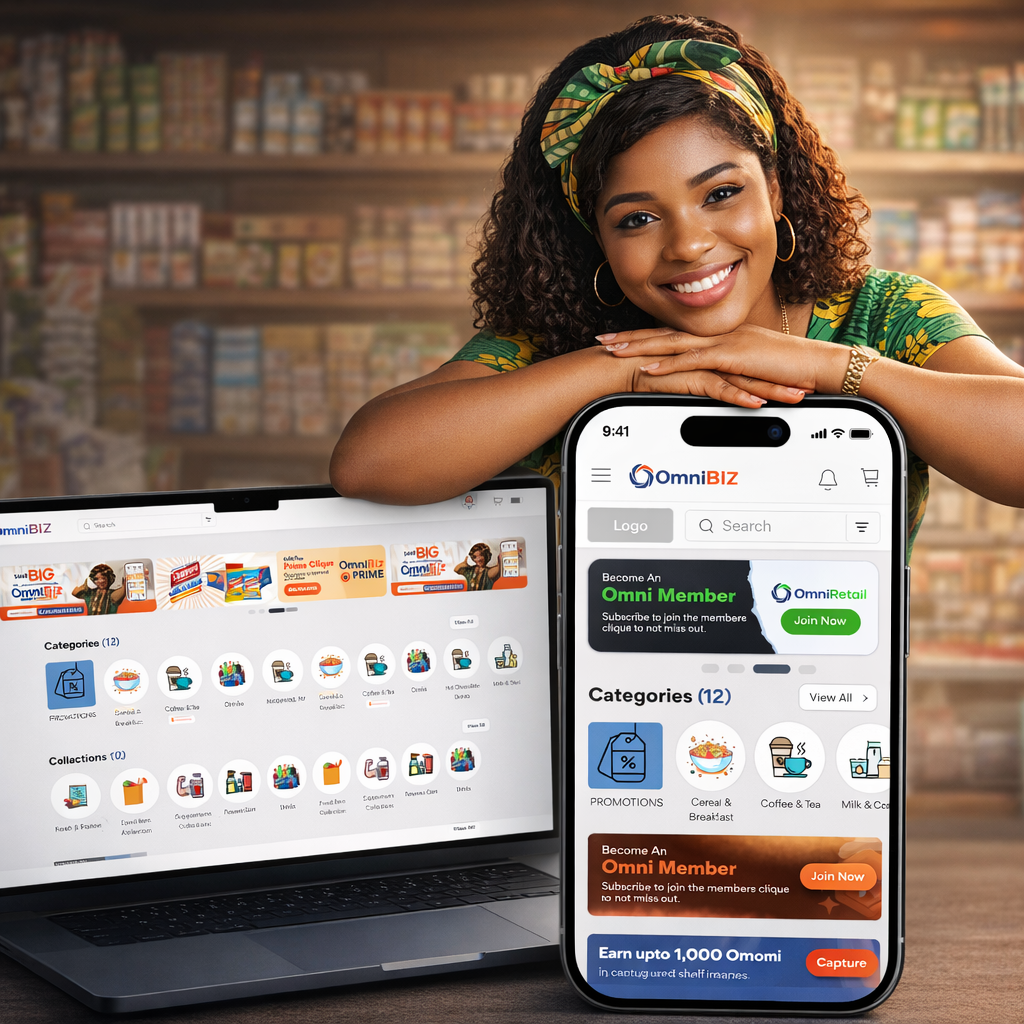
Omni FMCG mobile commerce interface representing Nigerian FMCG market demand and category flow
Why this report matters

Demand is resilient. Access is still fragmented.

This report goes beyond market-size headlines to unpack what is really shaping FMCG growth in Nigeria: inflation-led buying shifts, retailer stocking behavior, credit dependence, and route-to-market bottlenecks.

Trade flow map

How value moves across Nigeria's FMCG trade chain

The opportunity is not just demand it is the ability to connect manufacturers, distributors, retailers, and consumers with better visibility, financing, and execution.

Manufacturer
Distributor
Retailer
Consumer
Population insight

Nigeria's scale is the story 238M people with a young median age create massive FMCG demand potential.

Large population size, youthful demographics, and rising urban concentration together create one of Africa's most important demand engines but distribution access and execution determine who captures the opportunity.

Population
238M
Large-scale consumer demand base
Median Age
18.1
Young demographic profile
Urban Population
53.9%
Growing demand concentration
Internet Users
107M
Digital distribution tailwind
Macro dashboard

Nigeria at a glance

A quick view of the structural forces shaping demand, trade behavior, and FMCG distribution execution.

Age Structure
Population mix and long-run demand implications
56.4%15–64 years
0–14 years
40.5%
15–64 years
56.4%
65+ years
3.1%
Africa FMCG Comparison
Toggle between market size and growth rate
Nigeria
$25B
Egypt
$27.5B
South Africa
$10.2B
Kenya
$7.5B
Morocco
$3.3B
Signature insight rail

10 signals shaping Nigeria's FMCG market in 2026

Interactive summary cards designed for executives, commercial teams, and strategy leaders.

What this means: Demand remains structurally strong, even under consumer pressure but access and channel quality determine who captures the value.
$25B+ projected household FMCG spending visual
What this means: Price-led growth may overstate real consumption health. Teams should track velocity and pack migration, not revenue alone.
Value growth can mask volume stress visual
What this means: The market outlook is strong, but winners will solve execution frictions in trade and fulfillment.
Long-term CAGR remains attractive visual
What this means: Supply resilience and localized partnerships can reduce volatility and improve responsiveness.
Local sourcing matters more visual
What this means: Thin margins and cash-cycle strain make financing and route efficiency central to GTM performance.
Distributor economics remain under pressure visual
What this means: Formal trade channels still have large whitespace if they can match reliability, pricing, and convenience.
Open markets still dominate sourcing visual
What this means: Working capital is not a nice-to-have it directly affects stock continuity, assortment breadth, and repeat orders.
Credit is a growth lever visual
What this means: Affordability pressure shifts demand toward stronger price-value propositions and smarter pack strategies.
Value brands are gaining momentum visual
What this means: Retailers prioritize what moves. Demand visibility and availability are stronger levers than broad trade pushes.
Demand beats margin in stocking decisions visual
What this means: High openness to switching creates a share-gain opportunity for brands with strong execution at the shelf level.
Retailers are open to trying new brands visual
Ecosystem flow

How FMCG moves in Nigeria

Understanding where visibility, financing, and fulfillment break down and where value compounds.

Node 01

Manufacturer / Importer

  • Production planning vs demand volatility
  • Pricing pressure and channel incentives
  • Limited downstream sell-out visibility
Opportunity: RTM visibility + assortment intelligence
Node 02

Distributor

  • Thin margins and cash-cycle stress
  • Inventory risk and stock balancing
  • Collections and credit exposure
Opportunity: working capital + demand-led replenishment
Node 03

Retailer

  • Fast-moving assortment choices
  • Credit dependency and cash constraints
  • Sourcing trade-off: price vs reliability
Opportunity: embedded finance + reliable fulfillment
Node 04

Consumer

  • Affordability sensitivity
  • Pack-size adaptation
  • Brand switching under pressure
Opportunity: availability-first category strategy
Fragmented channelsWorking capital gapsLow visibilityHigh-frequency ordersInformal trade dominanceEmbedded finance opportunity
Retailer intelligence

Retailers as market sensors

Signals from thousands of retailers on sourcing, stocking decisions, digital readiness, and finance behavior.

Retailer Gender Split
Share of respondents
61%Female
Female
61%
Male
39%
Retailer Age Distribution
Prime operating years dominate
18–25
5%
26–35
23%
36–45
41%
46–60
28%
60+
2%
Digital Readiness by Region
Illustrative readiness score
South West
82%
South South
69%
NW + NE
55%
North Central
40%
Purchase Power Range by Region
Estimated monthly purchase power ranges
South West
1.8M–₦3.5M
SE / SS
1.5M–₦2.5M
North Central
1.2M–₦1.8M
NW / NE
0.8M–₦1.5M
Stocking Decision Drivers
Retailers prioritize movement first
Customer Demand
45%
Margins
33%
Incentives / Offers
12%
Brand Popularity
10%
Inventory Source Split
Current sourcing behavior
94%Open Market
Open Market
94%
Online Platforms
6%
Willingness to Buy Online
Formalization and digitization opportunity
72%Willing
Willing
72%
Prefer Offline
28%
Credit Importance & POS Usage
Finance and payment readiness
Credit important
74%
Somewhat important
18%
Not needed
8%
Uses POS
78%
No POS
22%
Category explorer

What Nigerians buy and what that means for trade

Interactive category storytelling that combines demand trends, affordability pressure, and route-to-market implications.

Noodles
High-frequency, convenience-driven staple with broad relevance across income segments

A category with strong habitual demand, youth relevance, and affordability-driven repeat purchase behavior. Strong indicator of pack-size sensitivity and velocity-driven trade execution.

Global rank (Nigeria)
#10
Africa rank
#1
Annual servings
~3B

What this means for brands

  • Win on availability and price architecture
  • Protect velocity, not just gross margin
  • Design promotions around repeat purchase behavior
Trend Snapshot
Noodles consumption trend (million servings)
20202021202220232024
Strategic thesis

Demand is abundant. Access is the bottleneck.

Nigeria doesn't have a demand problem. It has an execution, visibility, and financing problem.

Demand Drivers

Population scale and high-frequency FMCG consumption
Young demographics support convenience-led categories
Urban concentration improves demand density
Strong retail entrepreneurship across neighborhoods
Category resilience despite affordability pressure

Access Constraints

Fragmented procurement and sourcing channels
Thin distributor margins and cash-flow pressure
Retailer credit gaps and stock continuity risk
Limited end-to-end visibility across trade nodes
Uneven last-mile execution and regional variance
The next wave of growth will come from solving access not just pushing volume.
Future outlook

Where the next decade of FMCG growth will come from

The biggest upside sits in models that reduce friction across trade, cash flow, and fulfillment.

Digitized Procurement

Faster, more reliable sourcing with better visibility and fewer stockouts for retailers and distributors.

Embedded Finance

BNPL, working capital, and inventory-linked credit improve trade continuity and repeat purchase behavior.

Distribution Intelligence

Real-time visibility on movement, pricing, and demand improves route-to-market efficiency.

Localized GTM

Region-specific assortment, pricing, and engagement strategy will outperform blanket national execution.

Methodology & credibility

How these insights were built

A blended methodology combining macro context, expert views, and first-party trade signals.

Macro & Secondary Research

Economic, demographic, and category context from credible public and industry sources to anchor the broader market narrative.

Industry Conversations

Operator and expert perspectives across the FMCG value chain to capture strategic and on-ground realities.

First-Party Trade Intelligence

Retail and distribution behavior signals from transactions, interactions, category movement, and operational flows.

5,000+ retailer signalsMulti-category analysisNigeria-focused mappingTrade + finance + distribution lens
Get the report

Get the full Nigeria FMCG Industry Report 2026

Access the complete report for deeper visibility into market structure, category trends, retailer behavior, distribution bottlenecks, and digitization opportunities.

  • Market structure and growth drivers
  • Retailer sourcing and stocking behavior
  • Category-level demand trends
  • Distribution and access bottlenecks
  • Digitization and embedded finance opportunities